
'Buy on dips, buy on dips and sell on rise.'

The Reserve Bank of India (RBI) has kept its key lending rate, the repo rate, unchanged at 5.25 per cent for the second consecutive time, citing concerns over rising energy prices, supply disruptions from the West Asia crisis, and potential inflationary pressures.

Elevated global crude oil and natural gas prices, driven by geopolitical developments in West Asia, could significantly influence the Government of India's fiscal position for 2026-27, according to a report by ratings agency Icra.

Indian benchmark indices Sensex and Nifty experienced a significant slump in early trade, mirroring a sharp decline in global equities and a fresh spike in crude oil prices, exacerbated by simmering tensions in West Asia and a global unwinding of the AI-led rally. Track how sensex, Nifty fared on June 8.

India's wholesale price inflation surged to 8.30 per cent in April, up from 3.88 per cent in March, primarily driven by a significant increase in the prices of fuel, power, and crude petroleum, according to data from the commerce and industry ministry.

Sensex gains over 400 points while Nifty trades above 23,800 amid strong IT sector buying.

India has significantly reduced Aviation Turbine Fuel (ATF) prices for international airlines by 27% due to easing global fuel benchmarks, while simultaneously increasing commercial LPG and 5-kg cylinder prices to record highs.

Foreign Portfolio Investors (FPIs) withdrew Rs 49,340 crore (USD 5.16 billion) from Indian equities in June, driven by global risk aversion, a preference for developed markets, soaring US bond yields, and stretched domestic valuations, bringing total withdrawals to Rs 2.7 lakh crore so far in 2026.

Fuel prices have risen by about Rs 7.5 per litre since May 15, as global crude oil prices surged due to the ongoing conflict in West Asia and supply concerns around the Strait of Hormuz.

This is the time for India to plan forward fully, with the goal of Atmanirbharata, and energy security. The Persian Gulf is no longer a reliable source, points out Rajeev Srinivasan.

Kerala is facing increased inflationary pressure due to recent hikes in petrol and diesel prices, according to Chief Minister V D Satheesan. The state's economy is also impacted by the decline in remittances from the Gulf and higher oil prices.

The Indian rupee depreciated 16 paise to settle at a fresh lifetime low of 96.86 against the US dollar, marking its ninth consecutive session of decline, driven by elevated global crude prices and a strong dollar.

Bharat Electronics, Reliance Industries, Mahindra & Mahindra, Larsen & Toubro, InterGlobe Aviation, ICICI Bank and UltraTech Cement were among the other major gainers. Axis Bank, Infosys, Tata Consultancy Services, Trent and Titan were the laggards.

Shareholder payouts by India Inc, including dividends and buybacks, increased by 2.2 per cent year-on-year in FY26 to $5.06 trillion, but this growth lagged the 18.8 per cent rise in reported net profit for the third consecutive year, leading to the lowest dividend payout ratio in 12 years.

The Indian government has restricted industrial, commercial, and institutional users from purchasing petrol and diesel from retail petrol pumps, directing them to bulk sale points instead. This move, which can last up to 90 days, aims to address abnormal demand growth and prevent localised shortages caused by a significant price difference between retail and bulk fuel prices.

Indian benchmark stock indices Sensex and Nifty rebounded, closing over 1% higher, mirroring a global equities recovery after recent losses due to geopolitical tensions.

Stock market benchmark indices Sensex and Nifty ended 2.5 per cent higher on Tuesday after India and the US agreed to a trade deal under which Washington will bring down the reciprocal tariff on Indian goods to 18 per cent.

Indian benchmark indices, Sensex and Nifty, closed marginally higher after a volatile trading session, driven by value buying in IT and select blue-chip counters, despite global crude price hikes and a weak rupee.

Small- and midcap stocks have delivered their biggest monthly rally in 12 years, but rising oil prices and global tensions could make the road ahead volatile.

India's state-run oil marketing companies (OMCs) are projected to incur under-recoveries of approximately Rs 80,000 crore on liquefied petroleum gas (LPG) sales in FY27 if current loss levels persist, according to rating agency Icra.

Private bus operators in Sri Lanka warn of potential service disruptions and a nationwide strike due to significant fuel price increases, impacting public transport and raising concerns about inflation.

Petrol price has been increased by 87 paise in Delhi from Rs 98.64 to Rs 99.51 per litre. Diesel rates have gone up by 91 paise from Rs 91.58 to Rs 92.49.

'Existing investors who have not acted so far may consider holding on to these funds with the understanding that the higher returns they expected from them may now take longer to materialise.'

Indian oil marketing companies are incurring significant losses, selling petrol at a Rs 14 per litre loss and diesel at Rs 18 per litre, as elevated global crude oil prices, exacerbated by the West Asia crisis, outpace capped retail fuel rates, according to rating agency Icra.

The government has sharply reduced excise duty on petrol to 3 and diesel to zero, offering major relief to consumers. Here's how the price cut will impact fuel rates and inflation.

The Reserve Bank of India (RBI) has debunked reports of gold sales, stating that its physical stock of gold remains unchanged at 880.52 tonnes, countering claims of selling approximately USD 12 billion to protect foreign-currency reserves.

India's Central government is likely to see its fertiliser subsidy bill double to a record 3.4 trillion in FY27, up from the Budget estimate of 1.7 trillion, due to surging global fertiliser prices exacerbated by the West Asia war. This significant increase, coupled with revenue losses from excise duty cuts for oil-marketing companies, is straining the government's fiscal space, though capital expenditure plans remain unchanged.

Insights from behavioural economics suggest that an ambitious nudge can be effective if three conditions are met, points out Ram Singh Insights from behavioural economics suggest that an ambitious nudge can be effective if three conditions are met, points out Ram Singh, director, Delhi School of Economics.

The Indian rupee depreciated by 52 paise to settle at 93.35 against the US dollar, driven by failed US-Iran peace talks, surging crude oil prices due to a potential US blockade of Iranian ports, and a global flight to the greenback. This geopolitical uncertainty is also leading to foreign capital withdrawal from domestic equities.

Aviation fuel prices for domestic airlines remain unchanged, providing stability for local carriers, while commercial LPG and 5-kg cylinders see a significant rate hike due to rising international energy costs.

Despite a ceasefire agreement between Iran and the United States, the Strait of Hormuz remains blocked due to Iran's inability to locate and remove all the mines it laid during the conflict, hindering global oil and gas supplies.

Indian benchmark stock indices, Sensex and Nifty, closed nearly 1 per cent lower due to surging crude oil prices, weak global market trends, and significant foreign fund outflows, with geopolitical tensions and inflation concerns further dampening investor sentiment.

Indian stock market benchmark indices closed higher, driven by strong performance in blue-chip bank shares and a positive trend in global markets, with hopes of progress in US-Iran peace negotiations also contributing to optimism.
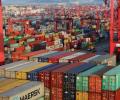
India's exports recorded a 13.78 per cent increase to USD 43.56 billion in April, marking the highest monthly outbound shipments in over four years, primarily driven by petroleum products. However, the trade deficit widened to a three-month high of USD 28.38 billion due to a 10 per cent rise in imports.

Congress leader Rahul Gandhi on Monday launched a scathing attack on Prime Minister Narendra Modi over the latest fuel hike, saying mehangai manav has struck again and he has just one job of making promises during elections and attacking people's pockets at other times.

Petrol and diesel prices in India have seen their fourth increase in less than two weeks, pushing cumulative hikes to nearly Rs 7.5 per litre since May 15, reaching their highest levels since May 2022. This surge, driven by global crude oil costs and the Iran conflict, is expected to exacerbate inflationary pressures and raise transportation costs across the economy.

"There is a sharp jump that we have seen in bookings of EVs... The jump, at least in our case, in just two months, it is about 2 to 2.5 times of what it used to be"

Indian benchmark indices, Sensex and Nifty, closed almost unchanged in a volatile session as investors reacted cautiously to mounting geopolitical headwinds and a significant jump in crude oil prices, with Brent crude surging to USD 94.68 per barrel.

Foreign Portfolio Investors (FPIs) withdrew nearly Rs 33,000 crore from Indian equities in May, bringing the total outflow for 2026 to Rs 2.25 lakh crore, driven by weak earnings growth, rupee depreciation, and more attractive opportunities in other global markets.

Indian equities on Dalal Street saw volatility as global market trends and oil price hike impacted investor sentiment. Track Sensex, Nifty50 movement and key market drivers for Apr 23, 2026.
